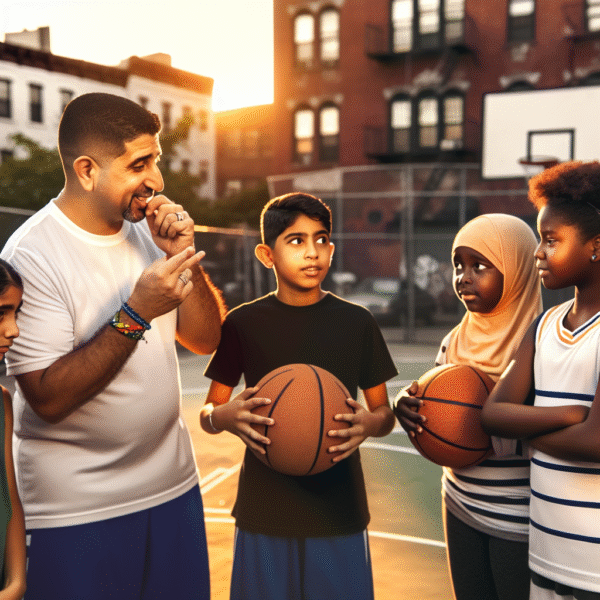
To coach youth basketball well, teach simple skills, set clear expectations, and keep every player involved. Young athletes need repetition, encouragement, and enough structure to stay focused.
Your job extends beyond winning games. You must help players build sound habits, understand teamwork, and enjoy returning to the gym.
How to Coach Youth Basketball With a Clear Plan
Start each season by choosing a few age-appropriate goals. Younger players may focus on dribbling, passing, spacing, and basic defense. Older teams can add screening, help defense, and simple offensive reads.
Share those goals with players and parents. Clear communication prevents confusion about playing time, positions, practices, and team rules.
Set Simple Team Standards
Create three or four rules that players can remember. Good examples include listening during instruction, encouraging teammates, hustling between drills, and caring for equipment.
Apply each rule consistently. Correct poor behavior calmly, then return the player’s attention to the next task.
Learn What Your Players Can Do
Use the first practices to evaluate balance, coordination, ball control, and decision-making. Avoid assigning permanent positions too early. Children grow at different rates and benefit from learning several roles.
Ask players about their experience and comfort level. A short conversation often reveals concerns that drills do not show.
Build Practices Around Repetition and Movement
A youth practice should keep players active. Long speeches lead to wandering attention, so explain one point and start the drill.
Plan each session before players arrive. Include a warm-up, skill work, a small-sided activity, and a short scrimmage.
Use a Consistent Practice Schedule
A familiar structure helps players settle into practice quickly. For a 60-minute session, use the following outline:
- Five minutes for movement and ball-handling
- Ten minutes for dribbling and passing
- Ten minutes for finishing and shooting form
- Ten minutes for individual and team defense
- Fifteen minutes for small-sided games
- Ten minutes for scrimmaging and review
Adjust the schedule to match your team’s needs. Still, avoid spending half the practice on one drill while several players stand in line.
Limit Lines and Waiting
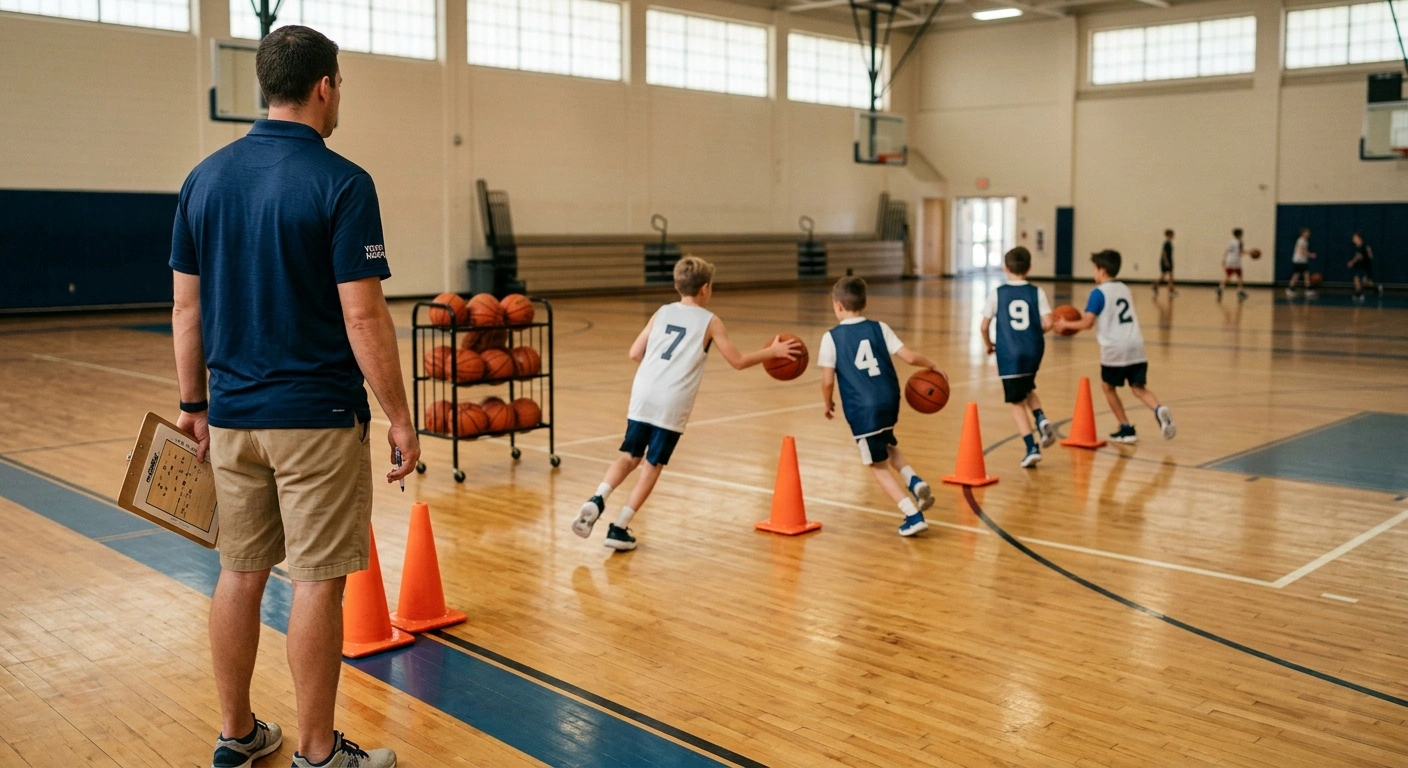
Use several baskets, cones, or stations whenever space allows. Pair players so each child gets more touches and immediate feedback.
Small groups also reveal mistakes faster. You can correct footwork or spacing before the error becomes a habit.
Teach One Detail at a Time
Young players struggle when coaches give five instructions at once. Focus on one cue, such as keeping the eyes up while dribbling.
Once players show progress, add the next detail. Short demonstrations usually work better than long explanations.
Teach Basketball Skills in a Useful Order
Before you coach youth basketball tactics, make sure players can stop, pivot, pass, and control the ball. These skills support every offensive system.
Start With Ball Control
Teach players to dribble with either hand while maintaining balance. Practice changes of direction only after they can control the ball at different speeds.
Use races sparingly because speed can hide poor technique. Controlled games, such as dribble tag, test vision and decision-making under pressure.
Develop Passing and Catching
Show players how to step toward a target and pass with purpose. Teach receivers to meet the ball instead of waiting for it.
Add a defender after players understand the basic movement. The defender creates a reason to use fakes, angles, and timing.
Teach Shooting Close to the Basket
Begin with balanced shots near the rim. Check the player’s feet, shooting hand, and follow-through before increasing distance.
Young players often change their form to reach the basket. Use a lower hoop when possible, or keep practice shots within a manageable range.
Make Defense Active and Simple
Teach players to stay between their opponent and the basket. They should move their feet, show their hands, and watch the opponent’s torso.
Introduce help defense through two-on-two and three-on-three games. These formats give each player frequent chances to communicate and recover.
Use Small-Sided Games to Teach Decisions
Three-on-three basketball creates more touches than a full five-on-five scrimmage. Players also find more space to drive, pass, cut, and defend.
Change the rules to emphasize a skill. Require a pass before a shot, award points for defensive stops, or limit each player to three dribbles.
Stop Play With Restraint
Pause a game when you can fix a specific mistake. Show the correction quickly, then restart from the same position.
Constant stoppages drain the energy from practice. Let players solve some problems without your voice directing every action.
Give Feedback Players Can Use
Effective feedback names the action and explains the correction. Instead of saying “focus,” tell a player to face the passer and show both hands.
Keep your tone steady after mistakes. Players learn faster when they can attempt a skill again without fearing embarrassment.
Praise Decisions, Effort, and Technique
Do not reserve praise for made baskets. Recognize a strong pass, a balanced stop, or a quick defensive recovery.
Be specific. “Good job” offers less guidance than “You kept your head up and found the open teammate.”
Correct Players Privately When Possible
Some corrections belong in a team demonstration. Personal behavior issues usually require a brief, private conversation.
State what happened, explain the expected behavior, and provide a clear next step. Then allow the player to rejoin the activity.
Manage Games Without Taking Over
Use games to measure learning rather than showcase a complicated playbook. Give players enough freedom to recognize space and make choices.
Callouts should stay short and useful. Remind the team about spacing, defensive assignments, or clock awareness without narrating every possession.
Handle Playing Time Honestly
Follow league rules and explain your approach before the season begins. Track substitutions if you have trouble remembering each player’s minutes.
Younger teams benefit from broad participation and varied roles. Older competitive teams may handle minutes differently, but coaches should still communicate expectations.
Keep Officials and Opponents in Perspective
Model the behavior you expect from players. Speak to officials respectfully and avoid blaming them for a loss.
Shake hands with the opposing coach and acknowledge good play. Children notice how adults respond under pressure.
Work Constructively With Parents
Hold a short parent meeting before the first game. Discuss attendance, communication, equipment, playing time, and sideline conduct.
Choose one communication channel for schedule updates. A team email, messaging app, or shared calendar can reduce missed information.
Create Boundaries for Game-Day Conversations
Avoid debating strategy or playing time immediately after a game. Emotions run high, and rushed conversations rarely solve the issue.
Set a cooling-off period and schedule a private discussion. Keep that conversation focused on the child’s development and specific next steps.
Keep Safety and Development First
Check the court before every practice. Look for wet spots, loose equipment, damaged rims, or obstacles near the playing area.
Schedule water breaks and watch for signs of pain or illness. Follow your league’s concussion, injury, and emergency procedures.
Match Training to the Players’ Age
Children need rest and varied movement. Avoid using running as punishment, since it links physical training with shame.
Teach proper movement through short activities instead. Skipping, shuffling, landing, and changing direction can improve coordination without exhausting players.
Measure Progress Beyond the Scoreboard
Track skills that show real development. Look for fewer turnovers, better spacing, stronger weak-hand control, and more defensive communication.
Review team goals every few weeks. If players struggle with one area, adjust your practice plan instead of repeating ineffective drills.
Help Young Players Build Lasting Habits
Learning to coach youth basketball takes patience, preparation, and honest reflection. After each session, note what worked and what needs a different approach.
Keep instruction simple and give every player meaningful repetitions. A well-run team improves its skills, supports its members, and wants to return for the next practice.