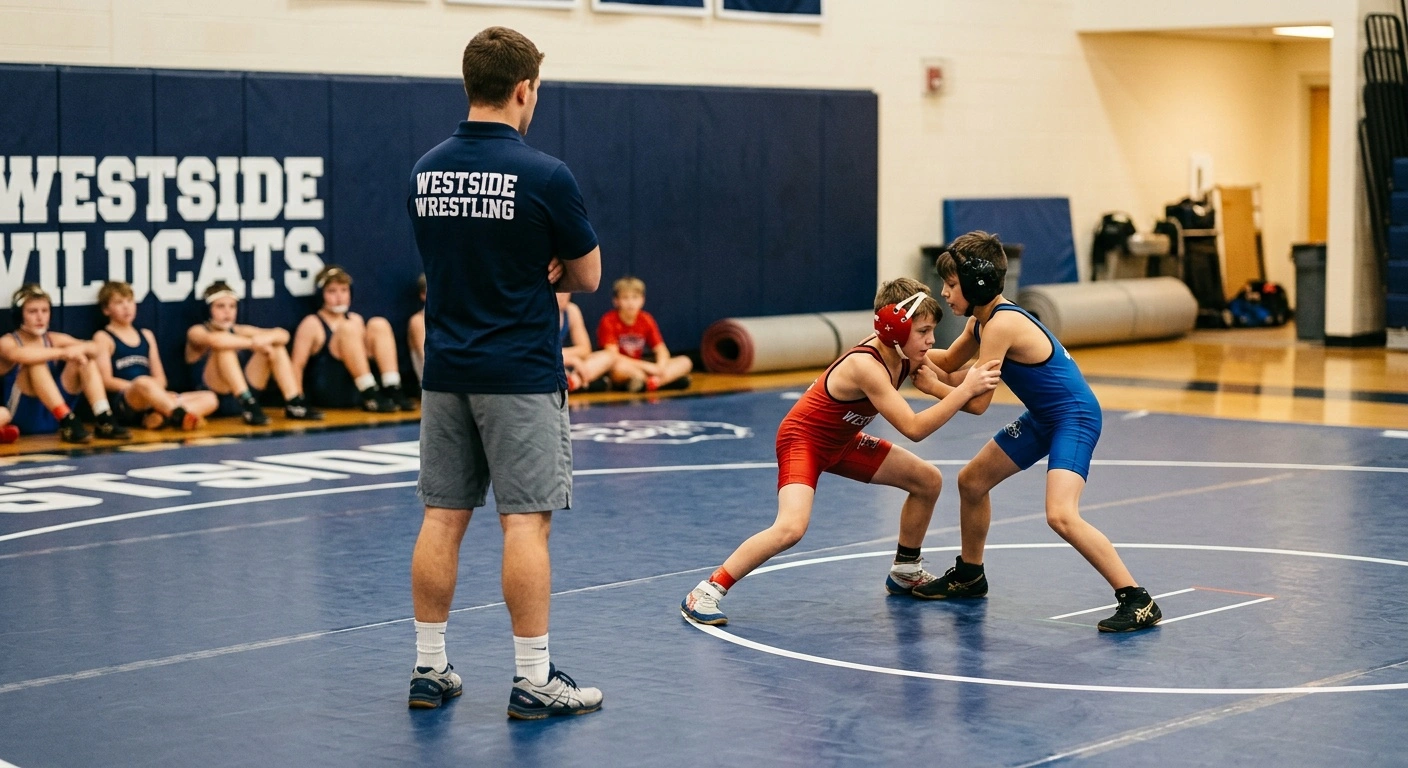
A sound plan for youth wrestling techniques starts with stance, balance, movement, and safe body position. Young wrestlers need repeatable skills before they add speed or advanced setups. Coaches should teach each motion in small steps, then test it through controlled drilling.
This guide focuses on beginner-friendly folkstyle skills. Rules vary by age group and wrestling organization, so coaches should confirm local restrictions before practice or competition.
Core Youth Wrestling Techniques for Beginners
Beginners should learn a small group of connected skills. A solid stance supports effective attacks, while good motion helps wrestlers create safe angles. Each technique should lead naturally to the next position.
Stance and Body Position
A wrestler should bend at the knees, keep the hips under control, and place weight on the balls of the feet. The head stays up, the back remains strong, and the elbows stay close to the body. This position helps the wrestler move without crossing the feet.
Teach athletes to keep their lead leg protected while staying ready to attack. They should avoid standing tall or leaning too far forward. Both habits make takedowns easier for an opponent.
Motion and Level Changes
Wrestlers should move with short, controlled steps. They can circle, change direction, and close distance without bringing their feet together. A partner can apply light hand pressure to test balance during the drill.
A level change begins at the knees, not the waist. The wrestler lowers the hips while keeping the chest upright and eyes forward. Practice this movement alone before adding an entry or takedown.
Penetration Step
The penetration step connects a level change to a leg attack. The wrestler steps between the opponent’s feet, brings the trail leg forward, and regains a strong base. Coaches should watch the wrestler’s posture throughout the motion.
Start with slow repetitions across the mat. Next, add a stationary partner who offers no resistance. Speed should come only after the wrestler can enter without dropping the head or reaching from too far away.
Basic Takedowns for Young Wrestlers
Young athletes do not need a long list of takedowns. Two dependable attacks provide enough material for drilling, situational wrestling, and early competition. Coaches can add setups once athletes understand the finishing position.
Double-Leg Takedown
The double-leg takedown starts with a level change and a close penetration step. The wrestler controls behind both knees, keeps the head against the opponent’s side, and drives at an angle. Turning the corner usually works better than pushing straight ahead.
Coaches should discourage tackles from long range. A clean setup, such as a light snap or inside tie, helps the wrestler enter safely. During practice, the partner should cooperate until both athletes can land under control.
Single-Leg Takedown
For a single-leg attack, the wrestler controls one leg while maintaining upright posture. The athlete should pull the leg close instead of letting it hang away from the body. Then the wrestler can finish by turning the corner or using an approved mat return.
Young wrestlers should never lift a partner without clear coaching and proper instruction. Rules for returns and lifts differ across divisions. Keep early finishes low, controlled, and easy to stop.
Safe Takedown Defense
A strong sprawl sends the legs back while the hips apply pressure over the attacker’s shoulders. The defending wrestler keeps the chest up and moves away from direct leg control. Heavy pressure should come through the hips, not the opponent’s neck.
After the sprawl, the wrestler circles behind while controlling an arm or the upper body. This follow-up matters because a sprawl alone does not score. Drill the defense in stages before allowing live finishes.
Top and Bottom Position Skills
Folkstyle wrestling requires athletes to work from all three positions. Coaches should give bottom and top skills the same attention as takedowns. This approach helps young wrestlers stay composed after the first scoring exchange.
Referee’s Position and the Stand-Up
From the bottom position, the wrestler begins with a stable base and active hands. On the whistle, the athlete clears hand control, brings one foot forward, and rises with the head up. The wrestler then turns to face the opponent after creating separation.
Teach the movement as a sequence: hand control, first move, strong posture, and escape. Beginners often rush to stand before clearing the opponent’s grip. Slow drilling helps them understand where the escape succeeds or fails.
Breakdowns and Pressure From the Top
The top wrestler should maintain hip pressure and stay behind the opponent’s arms. A basic tight-waist and near-arm breakdown teaches control without relying on force. The wrestler drives forward while keeping the chest connected to the opponent’s back.
Coaches should stop any action that twists the neck, shoulder, or spine. They should also teach athletes to recognize unsafe positions and release pressure at once. Control matters more than squeezing or pulling harder.
Pinning Fundamentals
A half nelson introduces basic turning mechanics. The top wrestler threads an arm under the opponent’s arm, controls the head safely, and drives from the side. The athlete should keep the chest low and move perpendicular after the turn.
Never allow a wrestler to force the arm or crank the neck. Teach steady pressure and correct positioning. The coach should supervise every new pinning drill closely.
How to Practice Youth Wrestling Techniques
Effective practice balances instruction, repetition, and live decision-making. Coaches can demonstrate one detail, let athletes drill it, and then correct the most common error. Long lectures leave less time for useful movement.
Use Short Drill Rounds
Rounds of 30 to 60 seconds keep young athletes focused. Pair each round with one clear goal, such as maintaining stance or finishing at an angle. Give brief feedback before the next attempt.
Partners should match by size, experience, and maturity when possible. Coaches also need to monitor fatigue because tired athletes lose posture and control. Water breaks and planned rest belong in every session.
Add Resistance Gradually
Begin with cooperative drilling so the athlete can learn the movement pattern. Then ask the partner to give light, predictable resistance. Finish with short situational rounds that start in a defined position.
For example, both wrestlers can begin with one athlete holding a single leg. One tries to finish while the other works toward a safe escape. This format creates realistic decisions without turning every repetition into an uncontrolled scramble.
Coach One Detail at a Time
Young wrestlers often struggle when they receive several corrections at once. Choose the detail that affects safety or success most, then let the athlete try again. Specific cues such as “head up” or “step between the feet” work better than broad criticism.
Coaches should praise sound effort and correct execution. Winning a drill through poor technique should not earn more attention than performing the skill properly. Consistent standards help athletes understand what to repeat.
Safety and Long-Term Skill Development
Every session should begin with a warm-up that prepares the neck, shoulders, hips, and knees for wrestling movements. Athletes should wear clean gear, trim their nails, and report pain or skin concerns. Coaches must follow concussion protocols and governing-body rules.
Do not teach slams, neck cranks, or techniques that the athlete’s division prohibits. A qualified coach should supervise all contact drills. Parents and athletes should also understand the difference between normal exertion and pain that requires evaluation.
Build Reliable Skills Before Adding Complexity
The most useful youth wrestling techniques rely on balance, posture, position, and control. A compact skill set gives beginners clear choices in neutral, top, and bottom positions. Repetition under steady supervision turns those choices into dependable habits.
Keep instruction simple, increase resistance in stages, and place safety ahead of short-term results. Strong fundamentals give young wrestlers a base they can use as their strength, coordination, and competitive experience develop.